
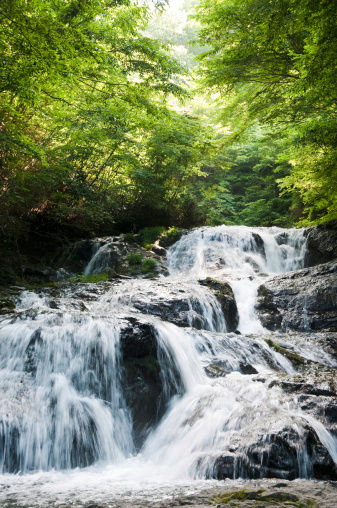
OK, so you’re a hiker or an outdoor enthusiast, you’re heading over to Tokyo sometime soon, and you’re looking for someplace out of the ordinary. It really is time for you to check out Okutama. This travel destination has a variety of activities available to the day-tripper as well as those staying overnight. There are numerous hiking trails, a spectacular walk along the Nippara and Tama rivers and lake Okutama, the Nippara and Ohtake Limestone caves, hot-springs, and trout fishing for the anglers in the crowd. And here’s the thing. Tokyoites rely on Hakone, Nikko, Okutama and other relatively close-by destinations for their getaway plans, but Okutama doesn’t have a high name recognition among foreign travelers. That’s bad news for most, but good news for those of us in the know, because Okutama is gorgeous from start to finish.
Expect to walk a lot. Okutama is situated in the Okuchichibu-sankai mountain range, with trails crisscrossing throughout the area. The levels of difficulty go from relatively easy (one hour) to difficult (overnight, with rock-climbing). Mitake-san, Kumotori-san (Tokyo’s highest peak, at just over 6,600 feet) and Hinode-san are just three of the many popular peaks to hike in the area. Make sure to pick up a hiking map of the area at one of the information centers in Okutama town.
There are a few hotels in the area, my very favorite is the Kokumin Shukusha Hatonosuso, a ryokan (Japanese-style traditional hotel) just outside of Hato-no-su station (two stops before Okutama). After a day of hiking in the mountains, walking down the river, checking out the caves, fishing, or walking around Lake Tama, the experience of sitting in a hot-spring-fed bath looking out over the deep gorge, is simply fantastic.
Now that you’re convinced, here’s how you get there. From Shinjuku Station you take the Chuo Line Ome train. If the train doesn’t go direct, you’ll have to change to the Ome line once you reach Tachikawa Station. I recommend you look out the train window after you pass Ome station, because you don’t want to miss the dramatic change of scenery from suburban to mountainous. It takes about two hours altogether from Shinjuku to Okutama station.
When to go? If you’re heading up there mid-April, you’ll be in time to see the cherry trees in bloom. Make sure to have a bottle of sake handy, sitting and enjoying the cherry blossoms while sipping sake is a must-do. Mid-summer in Tokyo gets hot, and a lot of folks head up to Okutama to escape the heat. If you’re heading up later in the year (mid- to late-October), the maple trees will be ablaze with colors. The place doesn’t get that much traffic in the winter, but hardy travelers will enjoy the winter landscape, and afterward, a warm-up in the hot springs.