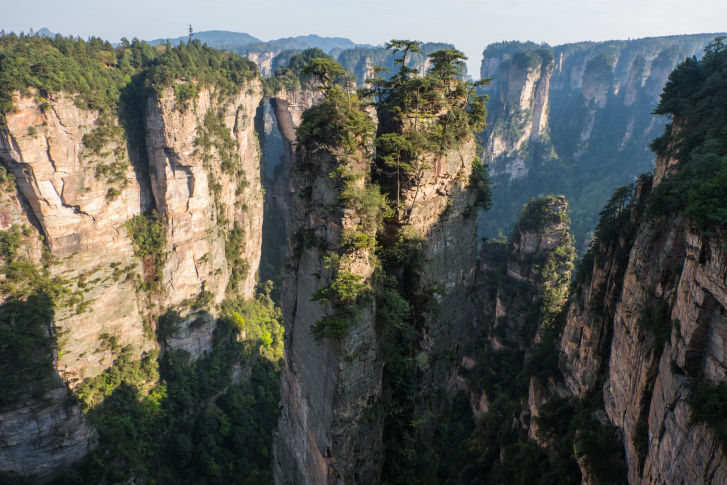
There are thousands of national parks in the world with over 200 of them being in China. Zhangjiajie is one of them. The area used to be fairly remote and inaccessible to visitors, but thanks to development, all that has changed. This park has an interesting history, which is probably why it’s quite popular for tourists.
History
Back in the Neolithic Age, Zhangjiajie was known as Dayong. Legend states that a strategist of the Western Han Dynasty, Zhang Liang, lived in Dayong. Liang feared he would be killed by the Han Dynasty’s first emperor, Liu Bang, so he took refuge in the area because it was so remote. His body is buried below Zhangjiajie Mountain, which used to be known as Qingyan Mountain. The area’s named changed from Dayong to Zhangjiajie in 1994 to reflect Zhang’s time there. The park covers 185 square miles and was a tree farm from 1958 to 1982 before it was declared a national forest park.
What To See
There’s so much to see at Zhangjiajie that it’s impossible to list everything there is to do. Here are some of the more popular places in the park to visit:
Yellow Stone Stronghold– This area is located to the west of the park. It takes up about 41 acres. Main attractions of Yellow Stone Stronghold include Five Finger Peak, Needle Peak, the Southern Gate to Heaven and Tranquil Trail in Fir Woods.
Gold Whip Stream- This stream is about 3.5 miles long. It is joined by the Suoxi Stream to the east and the Lute Stream to the west. The entrance of it is located less than 1,000 feet from the park’s gate. There are many different wild flowers growing nearby and the crystal clear water makes it easy to observe the marine life in the stream.
Yuanjiajie- This area is a must see for those visiting the park. It features a rock platform that visitors can stand on to see the area’s mountains and deep valleys. Main attractions of Yuanjiajie include the First Bridge Under The Sun, Mihun Stage and Back Garden. We did an in-depth blog post on the Glass Bottom in Bridge China
Tianzi Mountain– This mountain is close to 4,000 feet tall. On some days the peak seems to disappear up into the clouds, usually during the spring or fall. Visitors can get a closer view of it by hopping on a cable car.
When To Visit
The best time to visit the park is during the months of September and October when it is not too crowded and the weather is generally nice. From April through June it is the rainy season which makes it very difficult to safely explore the park. The summer months tend to bring in a lot of crowds and during the winter months there is the chance for frigid weather and icy conditions.
Other Important Information
The park is generally open from 7 a.m. to 6 p.m. It’s best to check ahead of time for closures. The majority of the people that work at the park do not speak English. It’s best to utilize a guide if it’s your first time visiting Zhangjiajie.