If January 1 has come and gone and you haven’t had enough New Year’s celebrating yet, you’re in luck; the Chinese New Year is on its way. Each Chinese New Year is designated for a specific animal. This is based on a legend about Buddha that explains that he asked all of the animals to meet him on the day of the new year. Twelve animals showed up, so he named a year after each of them. When all twelve have had their year, the cycle repeats.
2014 is the Year of the Horse. It begins on January 31 and is the Chinese year 4712. According to many astrologists, it will be an excellent year for travel – the more far away and off the beaten path the better, as horses love freedom. If you were born in 1918, 1930, 1942, 1954, 1966, 1978, 1990, 2002 or 2014, your symbol is the horse. Your lucky colors are said to be brown, yellow and purple – lucky numbers are 2, 3 & 7.
In China, the New Year Festival lasts for 15 days. Here are some of the festivities and traditions that go along with celebrating the new year in China.
-
Welcome The Gods With Fireworks. Traditionally, it is believed that the deities whose job it is to spread wealth and prosperity leave the heavens and visit the earth on the fifth day of the new year. This is a much celebrated arrival, so the gods are greeted with fireworks and firecrackers. In keeping with the themes of wealth and prosperity, you may see red envelopes passed out to children or unmarried and unemployed adults during the New Year festivities. These red envelopes are filled with money and their color is a symbol of good fortune. The money is called hong bao and is given by married, employed adults.
-
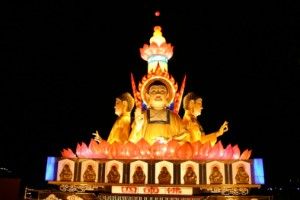
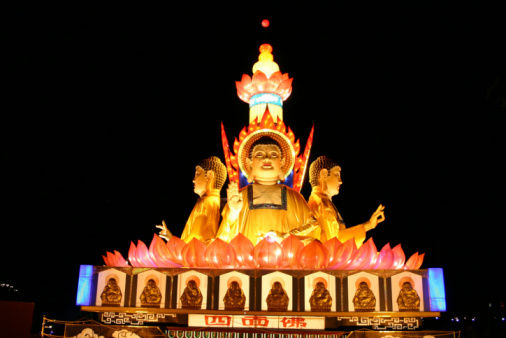
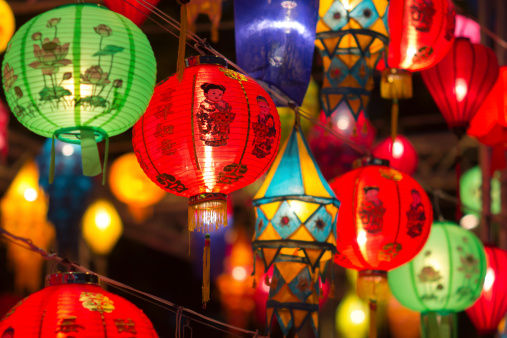
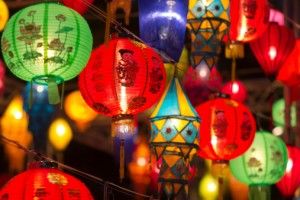 Lantern Festival. The lantern festival takes place on the fifteenth day of the new year. This celebration involves making paper lanterns that will decorate the streets and businesses and homes. Some lanterns will be decorated with flowers, zodiac symbols, and artistic scenes. You’ll also see lanterns on wheels. Some of these will be in the shape of a horse this year, for the Year of the Horse, but others will be shaped like rabbits. The rabbit represents a goddess named Chang E that is said to have jumped to the moon while holding a rabbit in her arms. It’s a fun tradition to look for her shape in the moon on the 15th day of the new year.
 -
Feasting. The New Year’s Eve feast is an important tradition and a time for families to come together. However, with the festivities stretching out for 15 days, some choose to continue the feasting that long as well. There are several traditional Chinese New Year feast foods. Look for Eight Treasures rice, a dish of glutinous rice that contains raisins, dried fruit, dates, walnuts, almonds, and sweet red bean paste. There is also Song Gao, a type of sweet rice cake. Several soups are on the menu, including one that’s made of cut up fruit cooked in thickened hot water. Duck, pork, chicken, and fish dishes are also common.
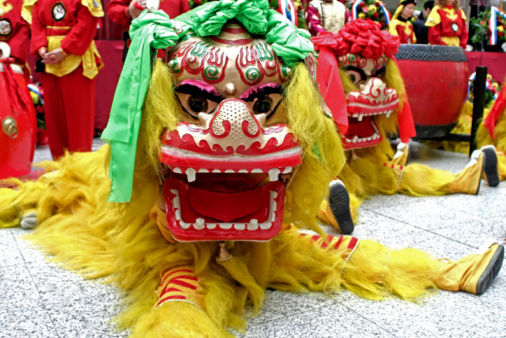
At any major Chinese New Year’s celebration, be on the lookout for the dancing dragon. You’re particularly likely to see dancing dragons on the fifth day of the New Year’s celebration when the fireworks are going off, and on the 15th day during the lantern festival. The dragon is considered a symbol of good fortune and prosperity.
Read about Chinese New Years Lucky foods, or browse our Pinterest folder with Chinese New Years traditions and recipes.