
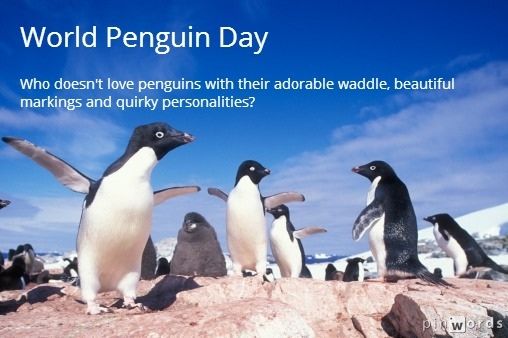
April 25th is World Penguin Day. This day was started in order to bring about awareness of these animals as well as spearheading conservation efforts. Penguins were first officially observed by Portuguese explorers in the 1490’s. World Penguin day began when scientists in McMurdo Station in Antarctica conducted a study over several years, and found that Adelie Penguins would return to the same spot, on the same day each year. Some penguin species are endangered. Through the Penguin Foundation and other non-profit organizations, you can donate to help with conservation, rescue and rehabilitation efforts.
Where To See Penguins:
The Galapagos Islands
The Galapagos Islands’ penguins are the only penguins in the world that can live in a tropical climate. In fact, they live here year round instead of migrating like other birds during certain seasons. Getting an up close and personal view of these penguins can be a once in a life time experience as they are currently endangered.
Antarctica
It’s no surprise that the frigid weather of Antarctica make it the perfect spot for penguins. Because penguins are such good swimmers, Antarctica explorers actually thought they were a type of fish. Penguins that live in Antarctica are pretty lucky as they don’t have any known land predators. A cruise is generally the best way to see penguins in Antarctica. It’s not uncommon for visitors to see a 4 foot tall emperor penguin standing on sea ice.
Capetown, Africa
The southern African city, Capetown, is the African penguin’s habitat. These creatures have become endangered due to things like climate change and pollution. Visitors can still catch a glimpse of the African penguin by taking a trip to Boulders Beach.
Philip Island, Australia
Most people associate Australia with animals like koala bears and kangaroos. It’s actually home to the world’s smallest penguins as well. This species of penguin, known as fairy penguins, are only about the size of a standard ruler. Visitors can see these creatures during a nightly penguin parade or on a viewing platform.
Fun Facts:
-Penguins are the only migratory species of bird that can’t fly. Instead of wings, they have flippers.
-Penguins eat fish and other types of sea animals. They can eat about 2 pounds of food during the summer months.
-They can swim anywhere from 4-7 miles an hour. The Gentoo species can actually swim up to 22 miles per hour.
-Penguins can dive deeper than any other bird species – up to 1,850 feet.
-There are 17 species of penguins left in the world.
-Penguins have a great sense of hearing…they can find family members in a crowd of thousands.
-The penguin’s tuxedo looking coat helps camouflage them from predators. They lose these feathers once a year, which is referred to as molting. During this time they cannot swim so they eat a lot to fatten themselves up beforehand. It takes about 3 weeks for their feathers to grow back.
If you aren’t up for taking a trip to another country to see a penguin, you can always visit SeaWorld’s new exhibit called Antarctic: Empire of the Penguin. Visitors will get a chance to learn a little bit about these birds and get a fairly up close view of them.