
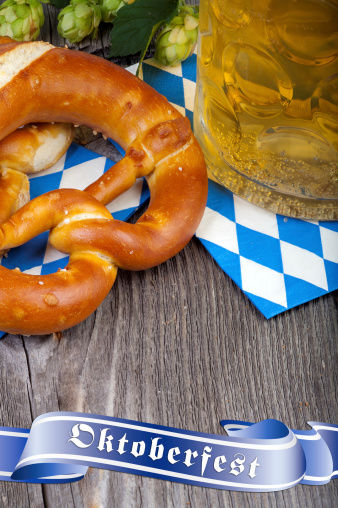
Oktoberfest is perhaps the largest festival in the world that has beer as its main theme. This yearly festival is held in Munich, Germany and will be taking place from September 20th to October 5th. It’s estimated that at least 6 million people will attend this yearly event.
History
Oktoberfest started in 1810 and was a celebration of the Bavarian Prince’s and the Saxon-Hildburghausen Princess’ marriage. Everyone in the city of Munich was invited to be a part of the five day festivities that were taking occurring. Anniversary celebrations took place throughout the years with it growing by leaps and bounds every year. Traditionally the last day of Oktoberfest is set to occur on the last Sunday in the month of October.
Fun Facts
Oktoberfest used to only take place during the month of October, but was moved to begin in the month of September because the weather is usually better.
It was extended two extra days in 2006 because the festival fell during a national holiday.
Festivities do not officially begin on the festival’s opening day until the mayor opens a beer barrel after a 12 gun salute and states in Austro-Bavarian “It’s tapped!”. The mayor gives the first beer to the State of Bavaria’s Minister-President.
Oktoberfest has been canceled 24 times throughout the years because of wars and epidemics.
On the festival’s first Sunday around 7,000 people perform in The Costume and Riflemen’s Procession.
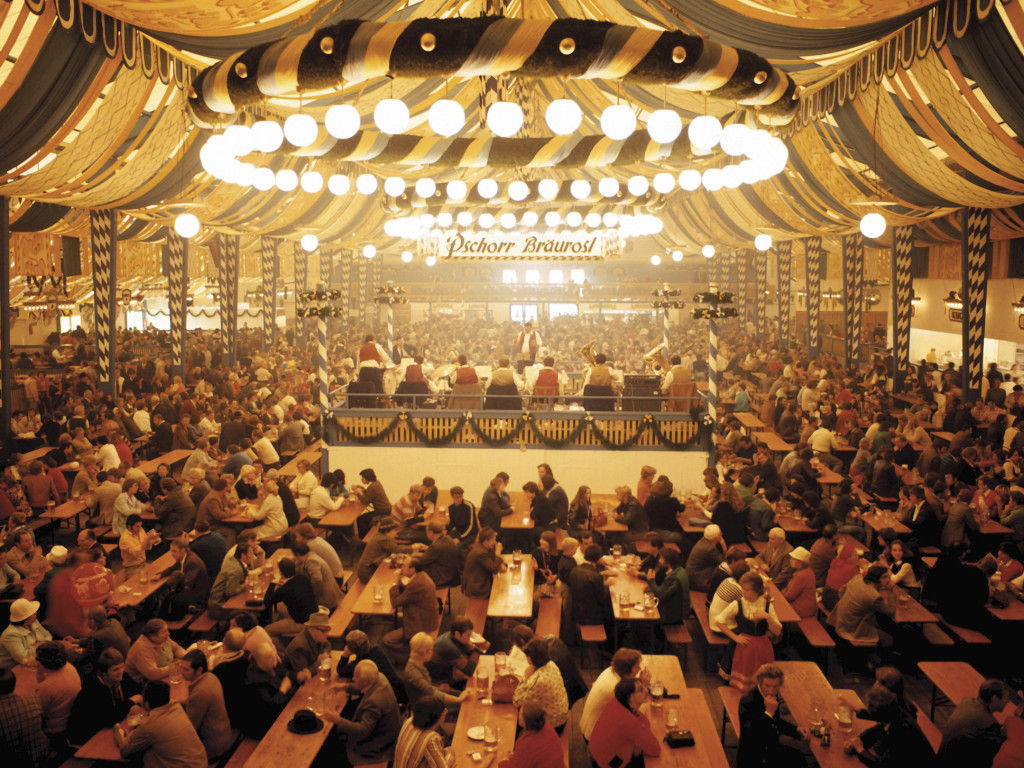
Oktoberfest may start out slowly in the morning, but as the day progresses so does the level of noise. By the end of the night it’s not uncommon to see people dancing on tables and singing with mugs of beer in their hands.
Before each band takes a break they give a toast called “ein Prosit der Gemütlichkeit” that’s dedicated to being relaxed and content.
A wide variety of music can be heard during Oktoberfest including German folk music, disco and rock songs.
During Oktoberfest more than 1.5 million gallons of beer is consumed. German beer is much stronger and darker than American beer. It is called Märzen and around 6% alcohol in it. Only four ingredients are allowed in it when it is brewing: malt, barley, hops and yeast.
With the high amount of beer that is drank at the festival it’s not surprising that people tend to get a little tipsy and lose some of their belongings. Some of the oddest things lost have been dentures, electric wheelchairs and Viking helmets.
Only 6 breweries in Munich are allowed to serve beer during Oktoberfest: Hofbräu, Augustiner, Hacker-Pschorr, Spaten, Paulaner and Löwenbräu.
The one liter stein that the beer is served in is called the Maß, and it can cost between 9 and 10 euros dependent on the beer.
Food is just as popular as the beer at Oktoberfest. Around 480,000 chickens are roasted and 200,000 pork sausage pairs are eaten. Other festival favorites include potato dumplings, duck, sauerkraut and a variety of breads and desserts.
Waitresses have to be able to carry 10 steins in order to serve beer at Oktoberfest. The most amount of steins ever carried was 19 that were completely full and weighed about 5 pounds each.
Unfortunately, brawls will happen, especially in large crowds. One of the most popular weapons that is used is a beer stein. In 2013, 58 people suffered a beer stein-related injury during Oktoberfest.
There’s an app for just about everything, including Oktoberfest. The app allows user to input data like their weight, height and how many beers they’ve consumed and it will estimate their blood alcohol content.
Don’t be surprised if you find yourself drinking next to a teenager at Oktoberfest. The legal age to drink in Germany is 16. Teens as young as 14 can drink if they are accompanied by an adult.
Guests who visit the entire grounds of Oktoberfest will walk about 103 acres.
Many attendees try to take their beer mug home with them. However, these mugs actually belong to the beer hall that they go it from. In the past, so many beer mugs have been stolen that security guards are placed throughout certain entrances just to be on the lookout for people trying to sneak off with mugs. Around 226,000 people tried to get away with this last year. Many of them were charged with theft.