Traditional Clothing From Around the World
Jeans, t-shirts and hoodies are all common in the United States. In other countries, however, their everyday dress can look a little different (okay, maybe a lot!). Many times there are laws that dictate what others wear and let’s just say they aren’t as liberal as those that we are used too. This is what traditional clothing looks like around the world.
Brazil
This country’s very hot and the style of clothing worn depicts that. A baggy trouser is worn called a bombachas. Brightly colored, woven ponchos are often worn over shirts. It’s not uncommon for straw hats to be used to cover the head and keep the wearer cool.
Ethiopia
Money can be scarce in this country which means that much of the clothes are handmade. Men dress is gabbis which are worn over their shoulders. Women wear a tunic style dress called a kemis. Those that are habesha also will wear a cloth over their head called a netela.
Ghana
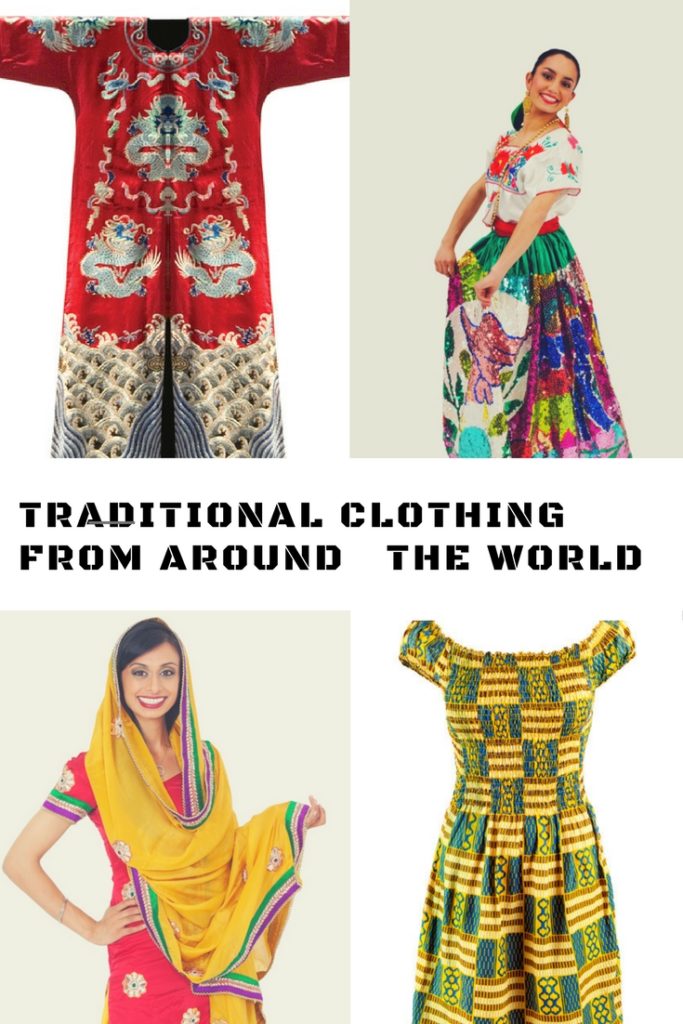
In Ghana a colorful fabric called Kente is what clothes are made out of. It consists of both cotton and silk. Women wear short sleeved tops that are bright as well as long, flowy skirts or dresses. They also wear head wraps. Men tend to wear pants and a smock that’s often striped.
Iran
The clothing in Iran has Persian influences. Men wear a headdress called a sarband. They also wear a cumerbund or kamarband that’s basically a wild belt. Some women that want to go the more traditional route will wear a jacket called a Pirahan, over their clothes.
India
A wide variety of different clothing is worn in India. Women either wear dresses called gonchas or sari’s. A Punjabi suit, called a salwar kameez, is often worn as well. Men will typically wear a dhoti, which is a cloth that’s tied around both their legs and waist. They also wear a long shirt called a kurta that goes below their knees. Turbans are common in the country also.
Japan
The typical style of dress in Japan depends on the occasion. In the past, Japanese clothing consisted of mainly kimonos, but nowadays they are only usually worn for special events. For example, men will wear kimonos when they are getting married or going to a funeral. Women will wear a kimono for the same reasons, but can also commonly be seen wearing kimonos during a Sijin no Hi, which is a coming of age ceremony. It’s not uncommon for kimonos to be worn that match the occasion or the season. During cooler months, darker colors are worn. With the spring and summer months come lighter, brighter colors and even floral designs.