
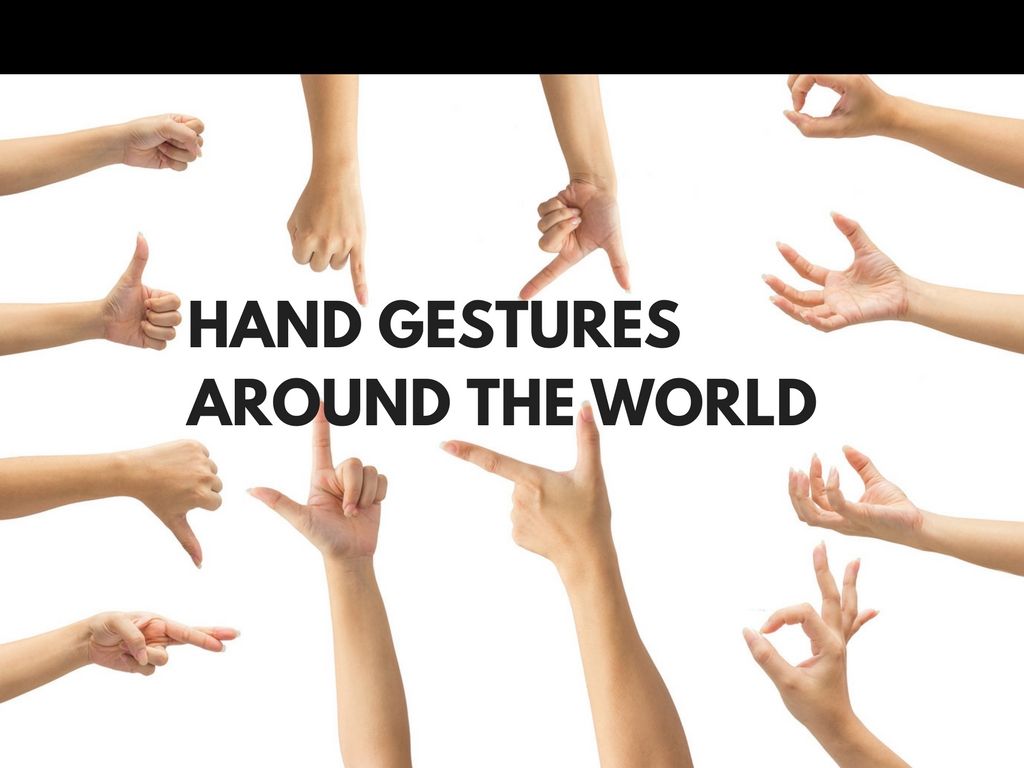
Body language can be hard to decipher, especially when you are in another country. An innocent gesture may not exactly be so innocent and something that seems offensive might actually be a compliment. These are some of the most common hand gestures that occur around the world.
Bull/Horn Fingers
In the United States, putting your middle and index finger down with your thumb on top and leaving your pointer and pinky finger up basically just means to rock on. In countries like Italy or Spain it means that someone’s wife is cheating on them.
The Duck Bill
In the United States putting all your fingers together to represent a duck bill and moving them back and forth just signifies that someone is talking. In Turkey it means that something is beautiful. In Egypt it means that someone will just be another minute or so.
Crossed Fingers
In The United States crossing your fingers simply means good luck. In Thailand it’s considered to be a crud gesture as it’s supposed to represent a woman’s anatomy.
Pointing To A Person, Then The Door
In the United States pointing to a person, then the door simply means that you want them to leave. In Peru it’s a funny way of saying that a person told a bad joke.
Rubbing Your Stomach
In the United States when you rub your stomach it means you’re hungry. In Ghana, it’s a way of signaling that you are satisfied after having a good and hearty meal.
Wiggling Your Finger
In the United States this is just a simple way of asking a person to “come here”. In the Philippines it is considered to be rude to do to a person as it signifies that you are beckoning a dog to come over.
Hand On Your Heart
In the United States putting your hand over your heart means love or devotion. In China it means to promise something that you fully intend to make happen.
Two Fingers In Front Of Eyes
In the United States when an individual put two fingers from the same hand in front of their eyes and slowly moves them away it means that they are watching you. In Spain it has nothing to do with another person and it basically means that they are broke.
Palm Wave In Front Of Face
In the United States waving your palm in front of your hand means you don’t want to see something. In Germany it means that another person is insane.
Hand gestures can be offensive in some cultures — knowing the difference is crucial. Our advisors’ Common Mistakes to Avoid When Traveling to Europe covers these cultural nuances and much more.