
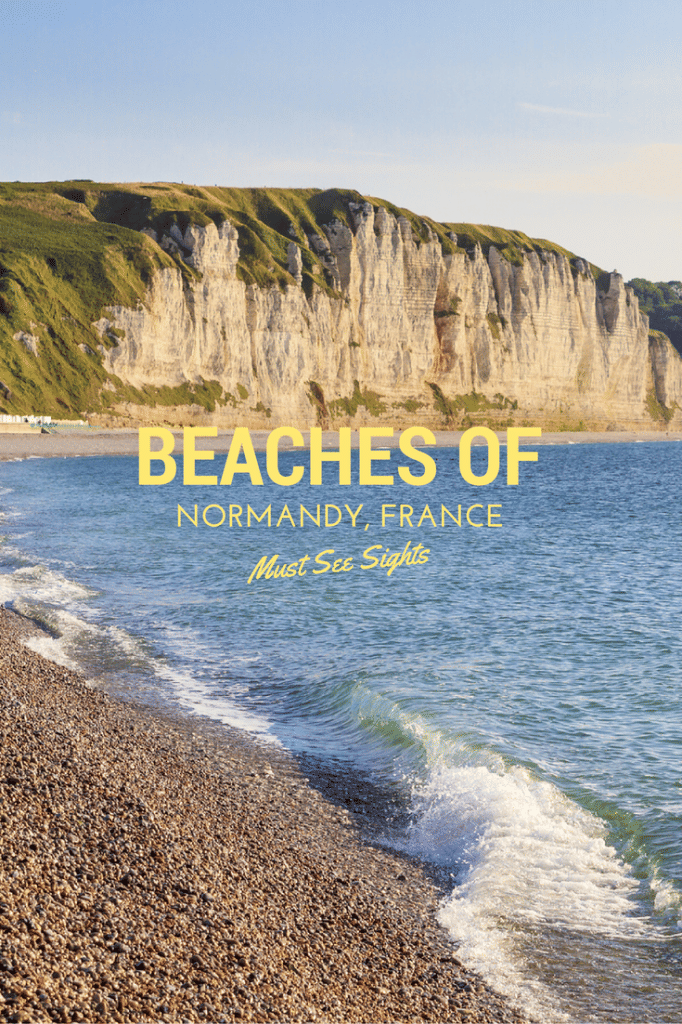
There are places in the world where history is not behind glass in a museum — it is in the ground beneath your feet, in the names on the headstones, in the view from a bluff over a cold gray beach where tens of thousands of young men came ashore in the early morning of June 6, 1944. Normandy is one of those places. No amount of reading or watching prepares you for standing at Omaha Beach.
But Normandy is also a living, beautiful region — full of half-timbered market towns, apple orchards, medieval abbeys, and some of the finest cheese and cider in France. A visit here rewards both the historically curious and the traveler who simply wants to explore an extraordinary corner of the French countryside.
The D-Day Beaches: What You’ll See and Feel
The five Allied landing beaches stretch along approximately 50 miles of Normandy’s Calvados and Manche coastline. Each has its own character and story:
- Omaha Beach — The most heavily defended and most costly of the landings, Omaha saw over 2,000 American casualties on June 6 alone. Today the beach is open and quiet, the sand wide and pale. The Normandy American Cemetery at Colleville-sur-Mer sits on the bluffs directly above, with 9,386 white marble crosses and Stars of David in perfectly aligned rows overlooking the sea. It is one of the most powerful places in the world to spend a morning.
- Utah Beach — The westernmost American beach, Utah was the most lightly defended and saw the fewest casualties. The Utah Beach Museum, located in a renovated German strongpoint, tells the story clearly and movingly with original vehicles, weapons, and personal accounts.
- Gold, Juno, and Sword Beaches — The British and Canadian landing beaches stretch east of Omaha. Juno Beach, where the 3rd Canadian Division came ashore, has a dedicated Canadian museum at Courseulles-sur-Mer that honors the 359 Canadians killed on D-Day. Gold Beach includes the remarkable remains of the Mulberry Harbour at Arromanches — the prefabricated artificial port that Winston Churchill devised and that allowed the Allies to offload supplies without a deep-water port. Concrete caissons still sit in the harbor more than 80 years later.
- Pointe du Hoc — Between Utah and Omaha, this clifftop promontory was scaled by U.S. Army Rangers under fire on D-Day morning. The lunar landscape of bomb craters, broken bunkers, and concrete casemates remains almost exactly as the battle left it. Walking through it is extraordinary.
The Caen Mémorial Museum
If you visit only one museum in Normandy, make it the Mémorial de Caen. It is one of the finest WWII museums in Europe — covering the rise of Nazi Germany, the fall of France, the occupation, the Resistance, D-Day itself, and the Battle of Normandy in extraordinary depth. Plan two to three hours minimum. The museum also organizes guided excursions to the beaches, which are excellent for first-time visitors who want historical context built into their tour.
Beyond D-Day: The Rest of Normandy
Normandy’s wartime history is remarkable — but the region has centuries of other stories to tell.
Mont Saint-Michel
One of the most recognizable silhouettes in France, Mont Saint-Michel is a tidal island abbey rising from a vast tidal flat at the border of Normandy and Brittany. It was built from the 11th century onward and has been a pilgrimage site ever since. At high tide the causeway disappears; at low tide you can walk across the sand to the island’s base. The abbey at the summit rewards the climb with extraordinary views and 900 years of Gothic architecture. Plan at least half a day here, and go early to beat the crowds.
Bayeux and the Bayeux Tapestry
The medieval city of Bayeux was the first French town liberated after D-Day — and remarkably, it survived the war almost entirely intact. Its 11th-century cathedral and cobblestoned centre are beautiful to walk. The Bayeux Tapestry, housed in a dedicated museum, is the real draw: a 230-foot embroidered narrative of the Norman Conquest of England, commissioned shortly after 1066. It is one of the most remarkable surviving artifacts of medieval Europe.
The Calvados Countryside
Away from the coast, the interior of Normandy is a landscape of apple orchards, dairy farms, and thatched farmhouses. The Route du Cidre winds through villages of the Pays d’Auge where family producers press and ferment cider using methods unchanged for generations. Calvados apple brandy, the region’s signature spirit, is aged in oak barrels and ranges from young and fiery to smooth and complex. Many farms welcome visitors for tastings. The market towns of Honfleur (a stunning medieval harbor beloved by Impressionist painters), Deauville (a chic Belle époque beach resort), and Lisieux are all worth an afternoon.
How to Get to Normandy
Normandy is easily reached from Paris. By train, Caen is about 2 hours from Paris Saint-Lazare; Cherbourg about 3 hours. By car, the drive from Paris to the D-Day beaches takes about 2.5–3 hours via the A13 motorway, which passes through Rouen — itself worth a stop for its stunning Gothic cathedral and the site of Joan of Arc’s martyrdom. Many visitors also combine Normandy with a Mont Saint-Michel stop on the way to or from Brittany.
Ferries from Portsmouth and Poole in England arrive at Cherbourg, Caen-Ouistreham, and Le Havre, making Normandy a natural starting or ending point for a UK-France road trip.
How Many Days Do You Need?
A focused D-Day itinerary can be done in two full days, but three is more comfortable: one day for the American sector (Omaha, the Cemetery, Pointe du Hoc, Utah), one day for the British and Canadian beaches plus Arromanches, and one day for the Caen Mémorial and the medieval sights of Bayeux. Add a fourth day for Mont Saint-Michel, and a fifth if you want to explore the Calvados countryside and Honfleur.
Guided Tours vs. Traveling Independently
The D-Day beaches are deeply meaningful but require historical context to fully understand. A knowledgeable guide makes an enormous difference — the geography of the landings, the tactical situation, the human stories behind specific memorials. Guided D-Day tours depart daily from Caen and Bayeux, ranging from half-day overviews to full-day immersions. Several operators also offer private guided tours that can be tailored to your specific interests (American sector, Canadian sector, paratroopers, the Resistance, etc.).
For travelers who want Normandy built into a broader France or European itinerary, guided France tours often include Normandy as a dedicated segment. European river cruises that dock in Le Havre or Cherbourg also offer Normandy excursions. At The Traveler’s Atlas, we can help you build the right itinerary — whether you want a standalone Normandy trip, a France tour that includes the beaches, or a river cruise that stops here on its way through France.
A Final Thought
Normandy is one of those destinations that stays with you. The scale of what happened here — the planning, the sacrifice, the narrow margin by which it succeeded — is genuinely staggering when you stand at the actual site of it. But the region is also quietly, warmly beautiful: the harbor at Honfleur catching the afternoon light, the smell of apple cider at a farm tasting, the medieval streets of Bayeux at dusk. France at its most human, most historically layered, and most memorable.