Paris in spring ranks among the most romanticized travel experiences in the Western imagination — and unlike many things that are romanticized, it actually delivers. The city blooms in April and May with a particular light, a particular energy, and a particular beauty that photographs can hint at but only being there fully captures. The boulevards fill with chestnut blossoms, the Luxembourg Gardens overflow with tulips and tourists in equal measure, and the terraces of every café become the center of daily life again after the grey months of winter.
But spring in Paris is also a practical sweet spot. Temperatures are warm enough for walking without summer’s oppressive heat. Crowds are manageable compared to peak season, and the cultural calendar — exhibitions, concerts, fashion events, and festivals — runs at full swing. This guide covers how to make the most of a single day or a full week in Paris during the spring season, with the perspective of travel advisors who know the city well.
When Is Spring in Paris?
Paris spring runs from late March through May. March can still be cool and occasionally rainy. Average highs hover around 55°F. The shoulder season pricing of April typically gives way to early summer rates in May, so April remains the sweet spot for travelers who want spring beauty without peak-season pricing.
How to Spend a Day in Paris in Spring
Morning: The Eiffel Tower and Champ de Mars
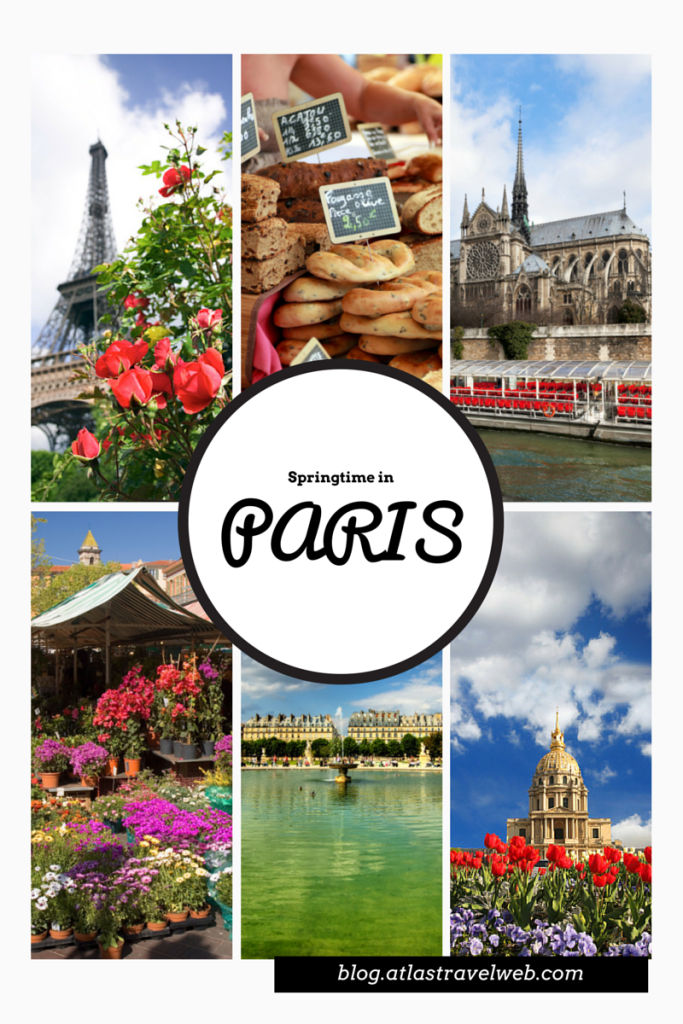
Begin early. The Eiffel Tower is at its most magical before the crowds arrive — lines for the elevator open at 9am, and getting there at opening puts you ahead of the tour groups that begin arriving around 10:30am. In spring, the Champ de Mars lawn surrounding the tower is already green and beginning to be used as a picnic ground; on a clear morning the view from the second floor platform across Paris, with the Seine gleaming and the Sacré-Cœur visible on the Montmartre hill above, is one of the great city panoramas in the world. Book your ticket online well in advance — walk-up tickets are rarely available on spring weekends.
After the tower, walk east along the Seine toward the Musée d’Orsay. The riverbanks in spring are lined with book stalls (the famous bouquinistes), flowering trees, and the quiet pleasure of Paris at a human pace.
Mid-Morning: Musée d’Orsay or the Louvre
If you’re visiting only one museum, the choice comes down to art era. Choose the Louvre for ancient and classical art — Egypt, Greece, Rome, and the Renaissance. The Musée d’Orsay covers 19th-century and Impressionist art by Monet, Renoir, Degas, van Gogh, and Toulouse-Lautrec.nly one museum, the choice often comes down to art era: the Louvre for ancient and classical art (Egyptian antiquities, Greek sculpture, Italian Renaissance painting including the Mona Lisa); the Musée d’Orsay for Impressionist and Post-Impressionist painting (Monet, Renoir, Degas, Cézanne, Van Gogh). For first-time visitors, we slightly prefer the d’Orsay — it’s more manageable in scale, the collection is extraordinary, and the building itself (a converted Beaux-Arts railway station) is spectacular. Both require advance ticket booking in spring; the Louvre without a reservation will mean a line that can stretch over an hour.
Lunch: Saint-Germain-des-Prés
The Left Bank’s Saint-Germain-des-Prés neighborhood is ideal for a spring lunch. The terraces of Café de Flore and Les Deux Magots — both legendary literary cafés — are always busy but the atmosphere is worth it for the Parisian experience. For something more genuinely local, wander the side streets off Boulevard Saint-Germain for wine bars, bistros, and crêperies where the food-to-price ratio is significantly better than the famous addresses. A croque-monsieur and a glass of Burgundy at a zinc-topped bar is a perfectly valid Paris lunch.
Afternoon: The Luxembourg Gardens
The Jardin du Luxembourg in spring is one of the most beautiful public spaces in Europe. The formal French garden design — with its central octagonal pond, manicured allées of trees, and statuary-dotted terraces — is surrounded by seasonal flower beds that are at their peak in April and May. Parisians come here in enormous numbers on spring afternoons: children sail toy boats on the pond, students read in the metal chairs that surround the fountain, and elderly men play pétanque in the gravel lanes under the chestnut trees. It costs nothing to enter and it is completely, deeply Paris.
Late Afternoon: Marais District and Place des Vosges
The Marais — Paris’s historic Jewish quarter — now also hosts a thriving LGBTQ+ community and some of the city’s best galleries, boutiques, and falafel shops. Visit in the late afternoon when the light goes golden and the cafés begin to fill. The Place des Vosges, France’s oldest planned square and one of Paris’s most beautiful spaces, is magnificent in spring: the arcaded red-brick buildings surrounding a formal garden create an atmosphere of extraordinary elegance. Victor Hugo’s house, now a free museum, occupies one corner of the square.
Evening: Seine River Cruise and Dinner
An evening Seine river cruise — departing from the Pont de l’Alma or Pont Neuf — shows Paris from the water as the city’s lights come on and the monuments begin to glow. The Bateaux-Mouches and Bateaux Parisiens both operate dinner cruises if you want to combine the river experience with a meal; for a less touristy option, board a Batobus (the river bus service) with a picnic of Parisian market food and make your own version of the experience.
Planning a European adventure? Explore our guides on Paris in the fall, European travel tips and tourist taxes, and the best spring travel destinations to round out your itinerary.
After the cruise, Paris’s spring evenings invite wandering. The Île de la Cité and Île Saint-Louis are magical at night; the streets around the Palais Royal offer restaurants and wine bars at every price point; and Montmartre’s Place du Tertre, despite its tourist-trap reputation, has a genuine charm in the late-evening hours when the day-trippers have departed.
Spring-Specific Paris Experiences Not to Miss
Cherry Blossoms in the Bois de Vincennes: Paris has its own cherry blossom moment in late March and early April, centered on the Japanese Garden within the Bois de Vincennes on the eastern edge of the city. Less famous than Tokyo’s and less crowded than Washington D.C.’s, it’s a beautiful spring morning’s outing.
Open-Air Markets: Paris’s outdoor markets are year-round institutions, but spring brings the city’s best produce: asparagus, wild strawberries, morels, and baby vegetables that make Parisian market shopping genuinely extraordinary. The Marché d’Aligre (Bastille neighborhood), Marché Bastille (Boulevard Richard Lenoir), and Marché des Enfants Rouges (Marais) are all excellent.
Versailles in Spring: The Palace of Versailles is 40 minutes from central Paris by RER train and magnificent at any time of year, but spring — when the formal gardens are being cultivated, the fountains are running, and the surrounding park is green and accessible — is arguably the best time to visit. The Musical Fountain Shows run on weekends from April through October.
Planning Your Paris Spring Trip
Paris rewards planning. The most popular museums, restaurants, and hotels book up weeks or months in advance during spring, especially for April and May weekends when European travelers are also taking advantage of their own school holiday windows. Book your key museum tickets before you leave home, make dinner reservations for your most important meals, and choose your hotel neighborhood deliberately — the Marais, Saint-Germain-des-Prés, the 7th arrondissement near the Eiffel Tower, and Montmartre each offer a distinct Parisian personality.
At Atlas Travel, our Europe specialists have firsthand knowledge of Paris at every season and can help you design a spring itinerary that goes beyond the checklist and into the genuinely memorable. Whether it’s a romantic weekend for two, a family first trip to France, or an extended Europe journey with Paris as one of several stops, we’ll build the trip that makes it unforgettable. Explore our Europe tour options or contact us directly to start planning.
More France Travel Guides from Our Expert Travel Advisors:
- France: Paris and Beyond
- A Stop in Bordeaux
- 7 Day Trips From Nice, France
- Places to Visit: Bordeaux, France
- Guedelon Medieval Castle in Modern Times
More France and European Spring Travel:
- Trafalgar WWI and WWII Battlefield Tour
- Trafalgar Tours: Hidden Treasures in Italy
- Places to Visit: Luxembourg City, Luxembourg
- A Cultural Renaissance in Marseille and Provence
- European Fall Festivals
- Getting Around Ireland
- Places to Visit: Budapest, Hungary
- European Quartet: Four Countries United in Harmony
More Italy and Mediterranean Travel:
- Italy Small Group Tours: What Are the Best Options?
- Italian Indulgences with Food Network Travel
- An Interesting Walk to the Trevi Fountain
- Capri: an Italian Paradise
- Insight Tours 2012 Italy Tours
- Scenic Tuscany
- Globus Tours Italy Tours
- Globus Tours Highlight: Italian Treasures
More France and Paris Travel: