
Evil Eye Meaning: What Is the Evil Eye?
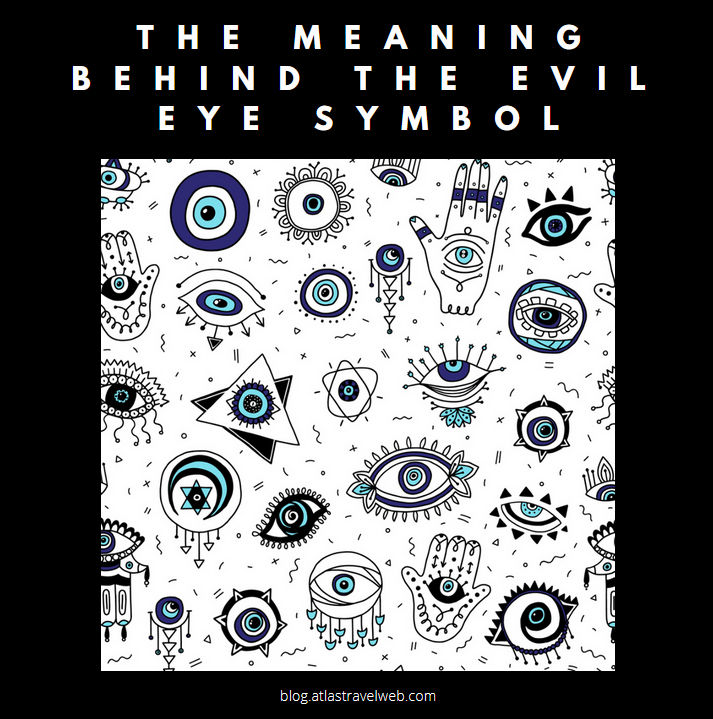
At its core, the evil eye — known as nazar in Turkish, mati in Greek, and ayin hara in Hebrew — is a curse. People believe a malicious or envious glare can transmit it. The theory is elegant in its simplicity: a stare loaded with envy, jealousy, or ill will can cause real harm to the person receiving it — illness, bad luck, loss, or suffering. Crucially, the look doesn’t have to be intentional. Even an admiring glance can carry the evil eye if it carries unchecked envy. The protective talisman — typically a blue glass bead with a concentric eye design — “reflects” the harmful gaze back to its source. This shields the wearer or home from its effects. Archaeologists have traced glass evil eye beads back over 3,000 years, finding them in Mediterranean sites as early as 1500 B.C. Phoenician, Assyrian, Greek, Roman, and Ottoman trade routes then spread them across the ancient world, from Morocco to India.Evil Eye Meaning Across Cultures Around the World
Turkey: The Nazar Boncuk
Turkey is arguably the world capital of evil eye culture. The nazar boncuk — a deep cobalt blue glass bead with a white and light-blue eye at its center — is everywhere: hanging from rearview mirrors, pinned on babies’ clothing, mounted above doorways, woven into jewelry, and sold by the millions at the Grand Bazaar in Istanbul. This tradition runs deep in daily Turkish life. When a nazar bead cracks or breaks, it’s considered a sign that it successfully absorbed a harmful curse — and is quickly replaced. Turkey’s evil eye heritage runs thousands of years deep, shaped by the ancient Anatolian, Greek, and Ottoman civilizations that all overlapped in this crossroads between Europe and Asia. Experience it firsthand on a Turkey tour or a Mediterranean cruise with an Istanbul port call.Greece: The Mati
In Greece, people call the evil eye mati (μάτι), and this belief remains strong across generations. The Greek tradition holds that enemies are not the only ones who can cast the evil eye. Anyone whose admiration carries a tinge of envy can do so — making it a social force touching all relationships. Greek folk medicine links the evil eye with headaches, yawning, and general malaise. An older woman lifts the curse through a ritual called xematiasma, whispering a prayer while making the sign of the cross. Blue-and-white evil eye jewelry is sold throughout Greece, but the most atmospheric place to shop for it is Athens’ Monastiraki district, where vendors line the flea market with handmade talismans, antique beads, and artisan jewelry. Explore Athens and beyond on a Greece tour or Greek Isles cruise.The Middle East: Hamsa and the Hand of Fatima
Moreover, Across the Middle East — in Egypt, Israel, Lebanon, Jordan, and Morocco — the primary evil eye talisman takes a different form: the Hamsa. Muslims know it as the Hand of Fatima; in Jewish culture, it goes by the Hand of Miriam. It’s a stylized open hand with an eye in the center of the palm, often decorated with intricate geometric patterns in blue and gold. The Hamsa serves as a powerful shield against the evil eye. It ranks among the most recognized symbols of the region. Understanding the evil eye meaning helps explain why the Hamsa has become so universally recognized. In Morocco, you’ll find Hamsa hands cast in silver, painted on walls, woven into rugs, and carved into wooden doors throughout the medinas of Marrakech, Fez, and Chefchaouen. Discover the medinas on a North Africa tour.Israel: Ayin Hara
In Jewish tradition, the Talmud has discussed the evil eye (ayin hara in Hebrew) for millennia. Jews believe that excessive praise or public displays of success can attract the evil eye from envious onlookers. Red string bracelets tied around the left wrist represent a centuries-old Kabbalistic protection tradition. Celebrities brought them wider attention when they adopted the practice in the early 2000s. Jerusalem’s Old City markets carry an extraordinary variety of both Hamsa and nazar talismans.India and South Asia
Furthermore, in India, people call the evil eye nazar or drishti, and protection rituals weave through everyday life. Black kohl dots are painted on babies’ foreheads and cheeks to deflect the gaze. Strings of dried chilies and lemons hang at doorways and on vehicles. People also use the peacock feather as a protective symbol. In some regions, a black thread tied around the wrist or ankle serves the same protective function as the nazar bead.Latin America: El Mal de Ojo
In Mexico, Guatemala, and across Latin America, mal de ojo (bad eye) is taken very seriously, particularly when it concerns young children. The belief holds that a person with “strong eyes” (often associated with light eye color) can accidentally harm a child through admiration. The traditional remedy involves a healer performing a cleansing ritual, or limpia, using an egg to absorb the negative energy. Many people wear turquoise and red bracelets for protection, and Hamsa-style pendants appear throughout Mexican craft markets.Italy: Il Malocchio
Similarly, Italians call the evil eye il malocchio, and in southern Italy — particularly Naples, Sicily, and Calabria — belief in it remains culturally significant. The cornicello (little horn), a twisted red coral or gold charm shaped like a chili pepper, is the traditional Italian talisman against the evil eye. You’ll find them hanging in cars, worn as necklaces, and displayed in homes across the south. In Naples, the gesture of the mano cornuta (horned hand) — index and pinky fingers extended — also wards off the malocchio. Experience southern Italian culture on a Italy tour or a Mediterranean cruise that includes Naples and Sicily.Ireland and Scotland: The Overlooking
Similarly, Even in the Celtic north, evil eye beliefs existed under the name “the overlooking.” Scottish and Irish folk traditions held that certain individuals could curse livestock with an admiring look. Women with unusual eye colors were especially suspect. The remedy was to give some of the milk directly to the person suspected of overlooking, thus breaking the spell.Where to Buy an Authentic Evil Eye Talisman While Traveling
Istanbul, Turkey — The Grand Bazaar
The Grand Bazaar (Kapalıçarşı) is one of the oldest and largest covered markets in the world — over 4,000 shops spread across 60 covered streets. It has sold evil eye beads for centuries. Look for artisan stalls that blow their own glass on-site; you can watch the nazar boncuk being made by hand, the same way it’s been made for generations. Prices range from a few lira for a simple bead to hundreds of dollars for elaborate gold-set pieces. Additionally, Beyond the Grand Bazaar, the Spice Bazaar (Mısır Çarşısı) and the streets of Sultanahmet are full of nazar vendors. The village of Görmüş near Bodrum is also famous for glassblowers producing nazar beads. Make Istanbul a stop on a Turkey tour or a Mediterranean cruise.Athens, Greece — Monastiraki Flea Market
The Monastiraki neighborhood in central Athens is part flea market, part ancient archaeology, and part artisan district. On Sundays, the outdoor market expands significantly, with vendors selling antique evil eye beads alongside vintage jewelry, icons, and handmade crafts. The permanent shops along Adrianou Street and Pandrossou Street carry everything from single nazar beads to elaborate mati wall hangings. The Plaka district adjacent to Monastiraki is also worth exploring for small family-run jewelry workshops that set Greek evil eye glass in silver and gold. Athens is a natural base for a Greece tour or the start of a Greek Isles cruise.Marrakech, Morocco — The Medina Souks
In Marrakech’s ancient medina, the souks are organized by craft: one alley for leather, another for lanterns, another for spices. The jewelry souk near the Mouassine Fountain carries Hamsa hands in every size and material — hand-hammered silver, painted wood, ceramic, brass, and beaded versions. Artisans here often work in small workshops just off the main souk lanes where you can watch them craft pieces by hand. Fez’s medina is even older and less touristy, with a deeper craft tradition for those willing to navigate its thousand-year-old alleyways. Explore Morocco’s medinas on a North Africa tour.Jerusalem, Israel — The Old City
Jerusalem’s Old City divides into Jewish, Muslim, Christian, and Armenian quarters — and each one carries its own version of evil eye protection. The Arab market (souk) in the Muslim Quarter overflows with Hamsa hands, nazar beads, and red string bracelets. The Jewish Quarter has shops selling red Kabbalah string and ayin hara jewelry. The Armenian Quarter is home to some of the finest hand-painted ceramic work in the region, including evil eye designs on tiles and plates.Naples, Italy — Via San Gregorio Armeno
Naples is Italy’s spiritual home of the evil eye and home to Via San Gregorio Armeno, a street famous year-round for artisan workshops producing religious and folk art. Here you’ll find cornicello charms in red coral, gold, and silver; malocchio ritual kits; and elaborate ceramic evil eye plaques. The craftsmen here have been working in this tradition for generations and are happy to explain the symbolism. Naples and the Amalfi Coast are stunning together on a southern Italy tour.Tips for Buying an Authentic Evil Eye Talisman (Evil Eye Meaning Matters)
Not all evil eye souvenirs are created equal. Here’s how to find something meaningful rather than mass-produced:- Look for handmade glass — In Turkey, authentic nazar beads are blown and shaped by hand from colored glass. Machine-made beads are perfectly round and uniform; handmade beads have slight irregularities that are a sign of authenticity.
- Ask about provenance — Artisan workshops in Istanbul, Athens, and Marrakech are often happy to explain their craft. If a vendor can’t tell you anything about where or how a piece was made, it may be a factory import.
- Go early in the market day — The best pieces in flea markets and souks move quickly. Morning visits give you first pick of quality items before the crowds arrive.
- Consider the material — Glass nazar beads are the most traditional form. Silver-set pieces from Greece and Turkey make beautiful jewelry. Red coral cornicello charms from Naples are considered the most powerful and most valuable.
- A cracked bead is a good bead — In Turkish belief, a nazar bead that cracks has done its job — it absorbed a curse. Don’t be discouraged if your talisman eventually breaks; replace it and consider the original one a success.
Bring the World Home With You
The evil eye is more than a souvenir — it’s a window into thousands of years of human psychology, spirituality, and the universal desire to protect what we love. Every culture that developed a belief in it also developed a community ritual around it: the passing of a bead from grandmother to grandchild, the hanging of a Hamsa above a newborn’s crib, the artisan’s workshop where glass is still shaped by breath and hands. The best way to understand that depth is to travel there. At The Traveler’s Atlas, we specialize in Mediterranean cruises, Turkey tours, Greece tours, and Italy tours that put you in the markets, medinas, and bazaars where the evil eye tradition is still alive and being made by hand. Let us help you plan a trip where the best souvenirs are the ones with a story.Frequently asked questions
The evil eye, often a blue-and-white glass bead called a nazar, is a protective symbol meant to ward off the “evil eye,” a curse believed to be cast by an envious or malicious glare. Wearing or displaying it is thought to reflect that negative energy away from the owner.
The evil-eye symbol itself is protective and considered good luck; it guards against the actual evil eye, which is the harmful envious look it deflects. So wearing an evil-eye charm is meant to keep bad luck away, not bring it.
Authentic nazar beads are widely sold in Turkey and Greece, where they are handmade from glass, and across the Mediterranean and Middle East in markets and jewelry shops. They make a popular travel souvenir; look for real glass rather than plastic for a genuine piece.