
Updated May 2026
A quick 2026 update from our team: With the recent norovirus outbreak on the Caribbean Princess (102 passengers and 13 crew reported ill on a sailing that departed Fort Lauderdale on April 28, 2026), and another outbreak on the Star Princess earlier this year, you may be seeing more cruise ship illness headlines than usual. For that reason, we want to give you the same calm, honest perspective we would give a client who picked up the phone today.
Norovirus on cruise ships is not new. The protocols for handling it are strong, and a few simple habits can protect your trip. Additionally, the original article below still holds up, and we have refreshed the parts that needed updating.
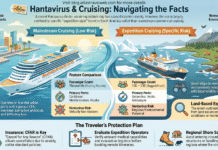
If you have also been seeing the hantavirus story in the news, that is a separate situation. We covered it in detail in our travel advisor’s honest guide to hantavirus and cruising.
Traveling is a wonderful experience, but taking precautions is important to avoid illness. Norovirus is a highly contagious virus that causes gastroenteritis, and it does not limit itself to cruise ships. In fact, it is almost as common as a cold. There are roughly 2,500 outbreaks reported in the United States every year by the CDC, accounting for tens of millions of illnesses.
People often call it the stomach flu or food poisoning. Norovirus spreads quickly anywhere large groups of people share space, including office buildings, restaurants, hotels, schools, daycare centers, healthcare facilities, and yes, cruise ships. It is spread from person to person, through contaminated food or water, or by touching contaminated surfaces.
Since COVID, most of us have become very aware of the importance of keeping our hands clean and avoiding crowded spaces. However, that is not always easy when you are waiting in line at a buffet to get food. This often happens on a cruise ship.
Why don’t we hear about norovirus in hotels or other settings? They are not required to report outbreaks the way cruise ships are. Cruise ships in U.S. waters operate under the CDC’s Vessel Sanitation Program, which requires illness reporting at strict thresholds. Consequently, that transparency is actually a good thing for travelers, even though it makes cruise ships look like outbreak hot spots in the news. According to CDC figures, less than 1% of reported norovirus outbreaks happen on a cruise ship. By comparison, the vast majority happen in healthcare facilities, schools, child care centers, and restaurants.
Norovirus can cause symptoms such as nausea, vomiting, diarrhea, and stomach pains. To prevent norovirus infection on a cruise, it is important to practice good hygiene: wash your hands frequently with soap and water, avoid contact with others who are sick, and clean and disinfect surfaces that may be contaminated. In addition, it is a good idea to be cautious about raw or undercooked food in destinations where local water quality is uncertain. Finally, follow the instructions of the ship’s crew and medical staff. They can provide guidance on how to stay healthy during your cruise.
Symptoms are unpleasant and can include vomiting, diarrhea, and stomach pains. They usually last about 48 hours, and there are some things you can take to feel better. Milk of Magnesia and Imodium have offered relief for some travelers, so pack some on your next trip; many times, the shop onboard carries these types of over-the-counter medications. Drink plenty of fluids to prevent dehydration, and bring some electrolyte packets with you.

Tips for Preventing Norovirus Infection While Traveling on a Cruise
- Wash your hands regularly with soap and water for at least 20 seconds.
- Hand sanitizers are better than nothing, but they should not take the place of hand washing, particularly before meals. Alcohol-based sanitizers are also less effective against norovirus than they are against many other germs.
- Avoid handrails and commonly touched surfaces when you can. When you cannot, wash your hands before touching your face or eating.
- Stop and think. If you just touched a menu or the side of a chair that others have clearly touched, wash your hands. Be aware of all surfaces you come into contact with.
- Try to use the bathroom in your own cabin instead of public ones when possible.
- Bring travel packs of disinfectant wipes to keep in your pockets.
- A travel-size bottle of Lysol in your suitcase is not a bad idea either, so you can disinfect your cabin when you first arrive. For example, I spray door handles, the remote, the telephone, the drawer and closet handles, the toilet seat and flush button, the faucet, and anything else we frequently touch.
- Be cautious at the buffet. During COVID, many buffets had crew members serve guests, but most cruise lines have gone back to self-service. Because of this, I started avoiding self-serve buffets when I was diagnosed with Celiac disease and needed to avoid cross-contamination. I have stuck with that habit.
- Check the ship’s sanitation program inspection score on the CDC’s website before booking. Anyone can bring an illness onboard that they caught before boarding, so we are not blaming the cruise line. However, a poor inspection record can signal an underlying issue worth asking about.
Related: Gluten Free Cruises
These tips do not just apply to cruise ships. We have written before about how germ-infested airline armrests and tray tables can be, so wipe those down too. In hotels, wipe off the TV remote, the on/off switches, and the telephone. In restaurants, after handling a menu or signing for the check, wash your hands before you touch any food. Carry your own pen so you do not have to borrow one.
Don’t let norovirus keep you from, or ruin, your vacation. With more cruise ship outbreaks making news in recent years, awareness has increased, but before you reconsider a cruise vacation because of all the news reports, there are some things you should know. To be clear, cruise ship outbreaks remain a small fraction of all reported norovirus outbreaks; it is much more common in schools, child care centers, restaurants, and health care facilities. Nevertheless, a little extra hygiene goes a long way, and it should help you avoid this illness wherever you travel.
If you want to dig deeper into how to make smart, well-protected decisions about cruising in this era of headline-driven anxiety, our recent travel advisor’s guide to hantavirus and cruising covers travel insurance, expedition versus mainstream cruising, and the questions worth asking your advisor right now.
Source: CDC, Norovirus and Vessel Sanitation Program
Note: We share tips for health, travel, and preparedness, but this is not official medical advice. Please contact your medical professional if you have questions or symptoms.