If you are dreaming about the kind of trip that lands on a fairly short list of “once in a lifetime” experiences (Antarctica, the high Arctic, or the Galápagos Islands), you have probably noticed that the booking choices look a little different from a typical Caribbean or Mediterranean cruise. The brochures use a different vocabulary. The ships look smaller. Some of them have ice-strengthened hulls, helicopters, and submarines. Some of them include parka rental and look more like floating boutique hotels. And the prices, the inclusions, the cabin layouts, and even the dress codes range across a much wider spectrum than mainstream cruising.
We have been booking these trips for clients for many years, and the most useful thing we can do at the start of a planning conversation is help travelers understand what kind of experience they are actually signing up for. Mainstream cruising and expedition cruising can both deliver a wonderful trip, but they are different products, and the right one depends entirely on what you want from your time in these remarkable places.
Here is the honest, plain-language comparison we wish more travelers had before they booked. (If you’re also weighing escorted land tours against cruising, you might find our comparison of Trafalgar vs. Costsaver and Globus vs. Cosmos equally useful.)
The Core Difference, in One Sentence
A mainstream cruise is a vacation that visits remote destinations. An expedition cruise is a remote destination experience that uses a ship as a base camp.
That distinction shapes almost everything else: the size of the ship, the people on board, the activities available, what is included, what is not, and what the trip will feel like day to day.
Ship Size and Atmosphere
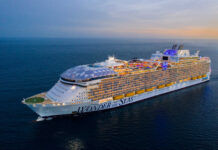
Mainstream cruise ships range from 1,000 passengers to well over 5,000. They are floating resorts, with everything you would expect from that label: pools, casinos, multiple dining rooms, Broadway-style theaters, kids’ clubs, and acres of public space. They are wonderful in their own right, but they are designed for the many.
Expedition ships are intentionally small. The polar expedition fleet typically ranges from about 75 passengers (Antarctica 21’s Magellan Discoverer) up to around 200 passengers, with a handful of newer ships in the 250 to 500 range (Viking Polaris and Octantis come in at 378, HX’s MS Roald Amundsen and Fridtjof Nansen carry up to 500). In the Galápagos, ship sizes are even smaller, capped by Ecuadorian regulation at 100 passengers and often half that.
Why does size matter so much in these regions? In Antarctica, the International Association of Antarctica Tour Operators (IAATO) limits shore landings to 100 visitors per site at a time. On a 100-passenger expedition ship, everyone goes ashore together. On a 500-passenger ship, the day becomes a rotation, and your time on land is meaningfully shorter. In the Galápagos, similar park rules limit group sizes and visitor numbers per site. Smaller ships mean more time off the ship, more nimble itineraries, and a more intimate group experience.
The Expedition Team vs. the Cruise Director
This is the difference travelers feel most quickly once on board. A mainstream cruise has a cruise director: a charismatic host who runs the activities calendar, introduces the shows, and keeps everyone moving. They are great at what they do.
An expedition ship has a team of subject-matter experts: naturalists, marine biologists, ornithologists, glaciologists, polar historians, photographers, and anthropologists. They live on the ship for the season, sometimes for years. They give daily briefings, lead every shore excursion, and join you at meals.
On Lindblad / National Geographic ships, you often have a National Geographic photographer in the team. Aurora Expeditions, for instance, might have a polar scientist running citizen science projects you can participate in. Ponant or Scenic Eclipse typically include regional specialists who guide you through specific landings.
If you go on an expedition for the wildlife, the science, or the photography, the expedition team is what makes it remarkable. They turn a beautiful trip into a transformative one.
Where You Can Actually Go
Their size limits mainstream ships to ports with the right infrastructure. They cruise past wonderful scenery, but they often cannot get into the most interesting places.
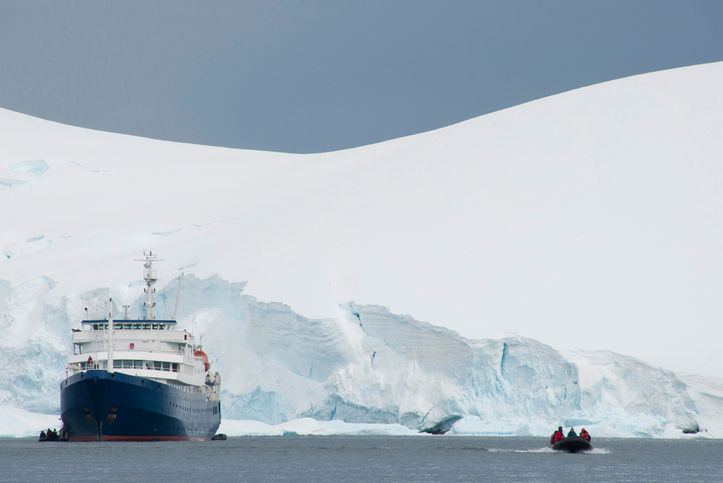
Expedition ships use Zodiacs (small inflatable boats) and sometimes kayaks, helicopters, or even submarines to access places where there is no port at all. Antarctica offers landings on the continent itself, with opportunities to cruise through ice channels and go ashore at penguin rookeries. Arctic itineraries might involve approaching glaciers, exploring fjords, and walking on tundra — or, in the case of Ponant’s Le Commandant Charcot, pushing through the polar pack ice toward the geographic North Pole. The Galápagos delivers small-group landings on each island with dedicated naturalist guides.
This flexibility is the heart of expedition cruising. Crews write itineraries in pencil. If a pod of orcas appears off the bow, the ship can stop. If the weather closes one landing, the team has alternates ready. You see what is actually there to see, not just what was scheduled six months ago.
Cabins, Comfort, and Atmosphere on Board
Mainstream ships offer the full range, from interior cabins to multi-room suites with butlers and balconies the size of a small apartment. The atmosphere is designed for indulgence: casinos, spas, specialty restaurants, and evening shows.
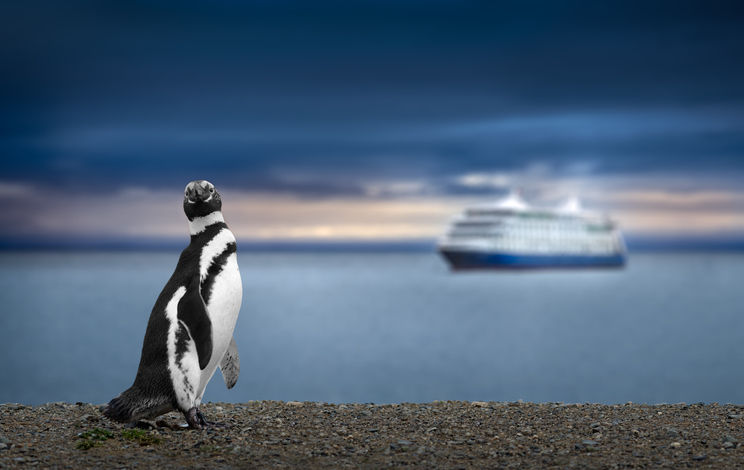
Expedition ships have evolved enormously over the past decade. The “old” stereotype of expedition cruising as rugged, basic, and twin-bedded does not really apply anymore. Today’s expedition fleet runs the full luxury spectrum:
- Ultra-luxury expedition (Scenic Eclipse, Seabourn Venture and Pursuit, Silversea Silver Endeavour, Silver Origin, Ponant Le Commandant Charcot): suites with balconies, butler service, multiple specialty restaurants, helicopters and submarines on some ships
- Premium expedition (Lindblad / National Geographic, Quark Expeditions, Aurora Expeditions, Atlas Ocean Voyages, Viking Polaris and Octantis): comfortable cabins, strong food programs, robust expedition teams, all-inclusive or near-inclusive pricing
- Classic expedition (HX, G Adventures, Oceanwide, PolarQuest, Poseidon): more traditional expedition feel, often more affordable, focus on the adventure rather than the amenities
In all cases, the atmosphere is intentionally social and informal. You eat with strangers and finish dinner with new friends.
Excursions, Activities, and What Is Included
On a mainstream cruise, shore excursions are typically purchased separately and can add hundreds or thousands of dollars to the total cost of the trip. Tours are often large group experiences with general guides.
Expedition cruising is largely the opposite. On most expedition ships, daily Zodiac landings, kayak outings, and ship-based science programs are included in the fare. Many lines also include parka rental, rubber boots, photography workshops, and onboard lectures. Some include all alcoholic beverages. Atlas Ocean Voyages was built around an all-inclusive model. Aurora Expeditions includes most onboard expenses. Even the more à la carte expedition lines bundle far more into the base fare than mainstream cruising does.
That makes price comparisons tricky. An expedition cruise that looks expensive on the front end is often comparable in true cost to a mainstream cruise once you factor in the upgrades, beverage packages, and shore excursions. We help our clients run those numbers honestly so the comparison is apples to apples.
Entertainment and the Pace of Each Day
Mainstream ships build their evenings around entertainment: production shows, headliners, comedy, dance clubs, casinos, late-night dining.
Expedition ships build their evenings around recap and reflection. After dinner, the expedition team gathers everyone for a review of the day, photos shared, stories swapped, and plans for tomorrow. There is usually a small library, sometimes a theater for documentary screenings, and often an observation lounge with floor-to-ceiling windows. People go to bed earlier because they are up at sunrise to be back out on the water.
If you are going specifically for the wildlife, the photography, the adventure, the days fill themselves. There are no days at sea in the way you might know them. Even sailing days are spent on deck watching for whales, attending lectures, kayaking from the ship, or exploring by Zodiac.
Dress Code
Mainstream cruising still has formal nights, smart casual dinners, and a general expectation that you will dress up some evenings.
Expedition cruising is informal at all times. You will spend most of the day in waterproof layers, fleece, and rubber boots. Dinner is usually nice but never formal. If you forget to pack a cocktail dress, no one will notice.
Food
Mainstream ships compete on dining variety: main dining rooms, buffets, specialty steakhouses, Asian fusion, Italian trattorias, sushi bars, and on some ships, dozens of specialty venues.
Expedition ships usually have one main restaurant and perhaps one or two specialty venues. The food, however, has gotten genuinely impressive over the past decade. Many ships now feature region-inspired menus, locally sourced ingredients where possible, and serious chef talent. Lindblad’s “From Ship to Shore to Ship” sourcing program, Atlas Ocean Voyages’ “Epicurean Expressions” cultural meals, and Scenic Eclipse’s ten-restaurant approach are examples of how seriously expedition lines take food now.
Sustainability and Responsible Travel
This is a category that did not really exist in the conversation a decade ago and now meaningfully shapes operator choice.
In Antarctica, IAATO membership is a baseline expectation. Every reputable operator we book is an IAATO member, follows strict landing protocols, and has decontamination procedures for boots and gear before each landing. Aurora Expeditions earned B Corp certification in 2024 (one of the first in the segment), which is a meaningful third-party signal of sustainability commitment. HX (formerly Hurtigruten Expeditions) operates hybrid-electric ships in the polar regions. Lindblad runs ocean conservation programs through its partnership with National Geographic.
If sustainability matters to you, ask your advisor about it. We can match your priorities to operators whose practices reflect them.
A Note on Antarctica Specifically
If Antarctica is your dream, two things are worth knowing.
First, the Drake Passage. The two-day crossing from Ushuaia, Argentina, to the Antarctic Peninsula is famous for being rough. Some travelers love the romance and tradition of the sea crossing. If you’re prone to seasickness, choosing the right cabin location — mid-ship and lower decks — can make a real difference. Others find the idea genuinely off-putting. There is a third option many travelers do not realize exists: the “fly-the-Drake” itinerary, pioneered by Antarctica 21 and now offered by several operators. You fly two hours from Punta Arenas, Chile to King George Island and join the ship there, skipping the Drake entirely. These itineraries cost more, but for travelers prone to seasickness or short on time, they are a real option.
Second, the season. Antarctic cruising runs from late October through March. The season has a meaningful arc: November is sea ice and pristine landscapes; December and January are the warmest temperatures and busiest wildlife; February and March are whale season. We help clients pick the timing that fits the experience they want.
A Note on the Galápagos
Galápagos cruising has its own logistical layer. Every ship operating in the islands must be Ecuadorian-flagged and Ecuadorian-crewed (national park regulations), so even the international brands you recognize work through local partnerships. Celebrity operates Celebrity Flora, Celebrity Xpedition, and Celebrity Xploration directly. HX charters MS Santa Cruz II from Metropolitan Touring. Lindblad / National Geographic operates the National Geographic Endeavour II, Islander II, and Delfina. Aqua Expeditions and Silversea (Silver Origin) operate at the higher-end small-ship segment.
Galápagos itineraries follow regulated routes; the National Park rotates ships through landing sites to manage impact. Ships with newer naturalist credentials and stronger expedition teams generally deliver a more rewarding experience than older budget options, but there are good choices at multiple price points. We can walk you through them.
A Note on the Arctic
“The Arctic” is not one place; it is many. The classics include Svalbard (Norway), East Greenland, the Canadian Arctic and Northwest Passage, Iceland, and for the most ambitious, the geographic North Pole on Le Commandant Charcot or the nuclear-powered 50 Years of Victory icebreaker. The wildlife focus shifts: polar bears in Svalbard, musk ox and Inuit cultural experiences in Greenland, narwhals and beluga in the Canadian Arctic. Each region has a different season and a different operator landscape.
So Which Is Right for You?
A mainstream cruise to a region that touches these destinations (a Norwegian Fjord cruise that includes a glimpse of the Arctic Circle, for instance, or a Holland America Antarctic Peninsula sail-by) can be a wonderful experience and a more affordable way to see beautiful scenery. You see less, and you do not land in the same way, but you get a comfortable, full-featured cruise vacation that brushes against these places.
An expedition cruise is for travelers who want the destination itself to be the experience. You will trade some of the comforts of mainstream cruising for genuine immersion. Expect to land, zodiac, and rise early. Moreover, you will come home with photos and memories that no other vacation produces.
If we had to pick a single rule of thumb, if seeing penguins from a balcony with a glass of champagne is enough, a mainstream cruise will make you happy. If you want to stand among the penguins, you want an expedition.
Travel Insurance Matters More Here
We say this on every booking, but it is especially true for expedition cruising. These trips are remote. While health considerations like norovirus prevention apply to all cruises, the remoteness of expedition itineraries means medical evacuations are more complex and costly. Evacuation logistics from Antarctica or Greenland are complicated and expensive. Standard medical evacuation coverage limits ($100,000 to $250,000) are sometimes not enough for a polar evacuation, and a long expedition cruise represents a significant investment that you want protected.
We always recommend strong primary travel insurance, often with elevated medical evacuation limits, and for many clients we recommend Cancel for Any Reason coverage, which protects your investment if something changes that you did not anticipate. The recent hantavirus story on a South Atlantic expedition vessel is a fresh reminder that the most remote trips also require the most protection. We are happy to walk through coverage options before you book.
The Atlas Difference
We have been booking polar and Galápagos trips for our clients for many years, across all the operators above and a few others. We hold relationships with the major lines and access to amenities, shipboard credits, and group savings that you will not find when booking direct. More importantly, we have travelers in our database who have sailed many of these specific ships and can share real, recent feedback that no brochure will give you.
If you have been thinking about Antarctica, the Arctic, or the Galápagos, the best next step is a phone call. Tell us what you are looking for, who you are traveling with, and what the trip needs to deliver to feel like the right one. We will match you to the operator and itinerary that fits, walk you through the practical realities, and make sure you are protected from deposit through return home. Reach our team at 1-800-942-3301. Se habla español.
Frequently Asked Questions
How much should I expect to spend on an expedition cruise? Antarctic expedition pricing typically starts around $7,000 to $10,000 per person for classic operators and rises sharply from there for ultra-luxury. Galápagos cruising starts around $4,000 per person. Arctic itineraries vary widely by region. Inclusions vary even more widely, which is why a real comparison requires more than just sticker prices.
When should I book? For Antarctica and the Galápagos, we typically recommend booking 12 to 18 months in advance, especially for prime departures and specific cabin categories. Last-minute deals occasionally surface, but the best ships fill early.
What about seasickness? Modern expedition ships are stabilized and well-designed, but the Drake Passage can still be challenging. Talk to your doctor about prevention options, ask us about fly-the-Drake itineraries, and consider mid-ship cabins on lower decks (where motion is least felt).
What if I want a more comfortable, less rugged version of expedition cruising? The ultra-luxury expedition segment (Scenic Eclipse, Silversea Silver Endeavour, Seabourn Venture and Pursuit, Le Commandant Charcot) was built for exactly this. You get real expedition experiences with butler service, suite-level accommodations, and elevated dining.
More Questions About Expedition Travel
Are these trips good for solo travelers? Several operators are now solo-traveler friendly. Aurora Expeditions has dedicated solo cabins with no single supplement starting in the 2026 season, and several other lines run solo-friendly departures throughout the season. Ask us.
Note: This article shares general information about expedition cruising and reflects the perspective of our travel advisor team. For specific medical, insurance, or destination questions, please consult appropriate professionals or your travel advisor directly.
Plan your once-in-a-lifetime trip with confidence:
Browse our cruise vacations, escorted tour vacations, and group travel options, or contact our team directly at 1-800-942-3301. Decades of helping travelers like you reach the world’s most remote and remarkable places.
Related reading:
- Hantavirus and Cruising: A Travel Advisor’s Honest Guide for Concerned Travelers
- Preventing Norovirus While on a Cruise
Related Cruise Articles You’ll Want to Read Next:
- Small Ship Cruises: Galapagos, Great Lakes, Africa
- Newest Ships in the Galapagos: What’s Sailing Now
- Greek Island Cruises: The Complete Travel Advisor’s Guide
- Best Cruise Lines for Solo Travelers
- Virgin Voyages Cruises: Everything You Need to Know
- Best Cruise Ship Water Slides: Thrills at Sea
More Adventure Travel Experiences:
- Best Trampoline Parks
- The Galapagos with Lindblad Expeditions
- New Hapag Lloyd Hanseatic Inspiration Expedition Ship
- Keeping Bugs Out While Camping
- Landmarks Around the World to Add to your Bucket List
- Where To See Sloths In Costa Rica
- Awesome Hotel Experiences
- Not So Common Animal Tours And Excursions
More Adventure and Expedition Travel:
- Best Places In The World To Learn How To Surf
- Exhilarating Zip Lines Around the World
- Butterfield and Robinson Trips
- Old Man’s Cave At Hocking Hills State Park
- Ocean Rider Seahorse Farm
- Alternative Ways To See The World
- Survival Vacations
- Sneak Peak At The Most Exclusive U.S. Ski Resorts
More Adventure and Travel Advice:
- Duty Free Shopping When Cruising
- Booking a Cruise While on a Cruise
- Avoid a Sunburn on Vacation
- Read the Fine Print!
- Booking With Atlas
- Best Time to See Wildlife in Alaska
- Special Needs at Sea
More International Expedition Travel:
More South America Expedition Travel:
- Tauck Tours to Central & South America in 2012
- Costa Rica Crawling
- Explore the Incan Ruins in Cusco, Peru
- South America Highlight: Chile
- Top 10 Travel Wonders of South America
- Nazca Lines and Paracas
- Brazil: Carnival, Rainforests & Samba
- Brazil is a Must for Coffee Aficionados
More Africa and Wildlife Expeditions:
- Best Cities In South Africa
- Riding the Rovos Rail in Africa
- Kenya – From Safari to Sea
- Places to Visit In Cape Town South Africa
- Safari Style in Kenya and Botswana
- Places to Visit: Madagascar
- Things You Need to Know Before Visiting Ghana
- Kaapse Klopse Festival in Cape Town
More Costa Rica Expeditions:
More Antarctica and Expedition Cruises:
- Penguins Around the World
- A Day in Antarctica
- Antarctica’s World of White Wonder
- Antarctica Cruises 2012
- Gap Adventures Early Antarctica Savings
- South Georgia Island
- Big Changes Ahead for Antarctica Cruises
- Antarctica Cruises: A Must for Photographers
More Israel and Middle East Expeditions:
- Israel Reopens To Fully Vaccinated Tourists May 23rd
- Hanukkah in Israel
- Israel’s Grand Overtures
- An Epicurean Journey to Israel
- Israel Tours 2011: One Country Three Ways
- Dead Sea
More Oceania and Expedition Cruises:
- Oceania Riviera Cruise Ship 2012
- Oceania Marina 2011
- Oceania Marina : See the World from a New Perspective
- Oceania Marina Itinerary Information for Inaugural Season
- Oceania Marina Cruise Ship : Exclusive Offer for Past Passengers
- Oceania Marina
More Windstar and Small Ship Cruises:
- Windstar Cruises Star Class Plus
- Windstar Cruises Coronavirus Booking & Health Policies
- What Makes Windstar Cruises Unique
- To Experience Windstar Cruises
- Windstar Cruises 2012 Collection
- Windstar Cruises Is Far From An Ordinary Cruise Line
More Jordan and Middle East Expeditions:
More Egypt and Africa Travel:
Planning a Faith-Based Group Trip or Church Cruise?
Atlas Travel Center specializes in faith-based group travel — from gospel cruises and church ministry retreats to women’s fellowship getaways. We handle everything: group contracts, comp berths, payment plans, and branded trip experiences so your congregation can focus on fellowship, not logistics. Learn more about our Faith & Gospel Group Travel program — or contact us directly to start planning your church group’s next trip.
Does Your Club or Group Want to Travel Together?
From mahjong clubs and wine societies to steppers groups and book clubs, Atlas Travel Center specializes in turning your community’s shared passion into an unforgettable group travel experience. We handle all the logistics — group contracts, payment plans, comp berths, and custom branded itineraries. Explore our Club & Hobby Group Travel program and see how your club can travel together (and make money doing it).
Planning a Black Group Travel Experience, HBCU Trip, or Greek Cruise?
Atlas Travel Center has deep expertise in Black group travel — from HBCU alumni cruises and Greek organization trips to affinity group experiences and cultural travel. We build fully branded group experiences where your organization leads and we run the back office. Comp berths, payment plans, and trust architecture that your members can count on. Learn about our Black Group Travel & Affinity Group program — contact us to get started.
Want to Host Your Own Group Cruise?
Hosting a group cruise is one of the smartest ways to turn your audience or community into a revenue stream — and Atlas Travel Center makes it simple. You bring the people; we run the cruise. Earn a free comp berth for every 16 guests, build your own markup into the pricing, and offer your guests flexible payment plans. Read our complete guide to hosting a group cruise and see exactly how the process works from deposit to embarkation day.
Did You Know Group Cruise Organizers Can Earn a Free Cabin?
The comp berth is one of the travel industry’s best-kept secrets — and it’s how savvy group organizers earn a free cruise for every 16 guests they bring aboard. Atlas Travel Center explains exactly how it works, how to build your own markup, and how to structure your group for maximum benefit. Learn everything about the comp berth model — then contact our group travel team to see what your group qualifies for.
Not Sure Whether a Group Cruise or Land Package Is Right for Your Community?
Atlas Travel Center offers both — and the right choice depends on your audience, your brand, and your goals. A group cruise is perfect for promoters and foundations who want their guests cabined together on one ship. A land lifestyle package works better for brands that want to curate a destination experience. Read our comparison: Group Cruise vs. Land Package and find out which model fits your community best.
Why Work with Atlas Travel Center?
Atlas Travel Center has been helping travelers plan extraordinary trips since 1987. Curious about the value a travel advisor brings in an age of AI and online booking? We have written the definitive guide: Why Use a Travel Agent in 2026: What AI Can’t Do for You. You can also read our honest comparison of travel agents vs. online booking sites and travel agents vs. AI — written from 35+ years of real-world experience.